Does CBD Show Up on a Drug Test? What You Actually Need to Know
It's one of the most searched questions in the entire CBD space — and one of the most misunderstood. If you've ever hesitated before taking a CBD product because you have a drug test coming up, or wondered whether your daily CBD routine could cost you a job, a custody arrangement, or a sporting eligibility, this post is for you.
The short answer is: CBD itself does not show up on standard drug tests. But the product you're using might still cause you to fail one. Understanding the difference between those two statements is everything.
What Drug Tests Actually Screen For
Standard workplace, sports, and legal drug tests do not test for CBD (cannabidiol). They never have. What they test for is THC-COOH — a metabolite produced when the body processes delta-9-tetrahydrocannabinol (THC), the psychoactive compound in cannabis.
The most common format — a urine immunoassay test — screens for THC-COOH at a threshold of 50 nanograms per millilitre (ng/mL) as the initial cutoff, confirmed by a more sensitive GC-MS (gas chromatography-mass spectrometry) test at a 15 ng/mL threshold. Research published in Drug and Alcohol Dependence (PMC) confirms this standard clearly: "The THC-COOH urine threshold for a positive workplace drug test is 15 ng/mL."
CBD does not metabolise into THC-COOH. CBD does not trigger a positive result on a standard drug test. The problem arises when a CBD product contains — intentionally or not — more THC than it should.
The Three Types of CBD and Their Drug Test Risk
Understanding which type of CBD is in your product is the single most important factor in assessing drug test risk. There are three distinct categories:
Full Spectrum CBD — Higher Risk
Full spectrum hemp extract contains all cannabinoids naturally present in the hemp plant — including CBD, CBG, CBN, and THC up to the legal limit of 0.3%. While 0.3% sounds negligible, regular use of high-dose full spectrum products can accumulate enough THC in the body's fat tissue to trigger a positive drug test result. Harrens Lab's clinical analysis confirms that "many CBD products contain trace amounts of THC which can be problematic for individuals subject to drug testing" — and full spectrum is the highest-risk category.
Broad Spectrum CBD — Low Risk When Properly Tested
Broad spectrum hemp extract retains the full range of cannabinoids — CBD, CBG, CBN, terpenes, and flavonoids — but undergoes additional processing to remove THC to non-detectable levels. When produced correctly and verified by third-party testing, broad spectrum CBD carries a very low drug test risk. The key phrase is "when verified by third-party testing" — which is where the industry's labelling problem becomes critical.
CBD Isolate — Lowest Risk
Pure CBD isolate contains only cannabidiol with all other compounds removed. It carries the lowest drug test risk of any format. However, it also loses the synergistic "entourage" benefits of the full cannabinoid and terpene profile — meaning you're trading therapeutic completeness for testing safety.
The Mislabelling Problem: Why "THC-Free" Doesn't Always Mean THC-Free
This is the part of the CBD drug test conversation that most brands don't want to highlight — because it reflects an industry-wide quality problem that undermines consumer trust.
A landmark study by Johns Hopkins Medicine tested more than 100 topical CBD products available online and at retail stores. The findings were striking: only 24% of products were accurately labelled. THC was detected in 35% of all products tested — including products explicitly labelled as "THC-free."
A separate study published in Drug and Alcohol Dependence and reviewed by PMC analysed 80 CBD products and found 64% contained detectable THC — including 5 products labelled as "THC-Free" that contained measurable THC concentrations. One product contained over 2mg/mL of THC — a level that could realistically trigger a positive drug test with regular use.
The same research draws the implications clearly: "Consumers are taking hemp-derived CBD products without understanding the risks of unintentional consumption of THC. This accidental use of THC could have adverse effects... as THC drug test findings could impact employment, military, and sport eligibility status."
This is not a fringe problem. It's a majority-of-the-market problem. And it's the reason that third-party testing isn't optional — it's the only way to verify what's actually in the product you're taking.
How THC Accumulates in the Body
Even trace amounts of THC from a CBD product can accumulate over time if you're using it daily. THC is fat-soluble — it binds to fat tissue and is released slowly, meaning it can remain detectable in urine for days or weeks after consumption depending on body composition, metabolism, and frequency of use.
Healthline's clinical overview on CBD and drug tests explains the mechanism: "Even small amounts of THC in CBD products could potentially trigger a positive result, especially if you're using large quantities of CBD or using it daily." For someone taking a high-dose CBD tincture every day from a product with even 0.2% THC, the cumulative THC load over weeks can exceed the detection threshold — regardless of what the label says.
This is particularly important for:
-
Employees in safety-sensitive industries (transport, healthcare, construction, government)
-
Athletes subject to anti-doping rules (WADA permits CBD but prohibits THC in-competition above 150ng/mL in urine)
-
People in legal proceedings where drug testing may be ordered
-
Military personnel where zero-tolerance policies apply
What "Third-Party Tested" Actually Means — And Why It Matters
A Certificate of Analysis (COA) from an independent, accredited laboratory is the only way to verify that a CBD product contains what it claims and nothing it shouldn't. A proper COA will show:
-
Cannabinoid profile — exact amounts of CBD, CBG, CBN, THC, and other cannabinoids in mg/g or percentage
-
THC content — specifically delta-9-THC, ideally showing as "ND" (non-detectable) for broad spectrum products
-
Contaminant screening — pesticides, heavy metals, residual solvents, and microbials
-
Batch number — matching the specific product you purchased
Cornbread Hemp's third-party testing guide notes that consumers should always look for a COA with a specific batch number — not a generic document that could apply to any production run. If a brand can't provide a current, batch-specific COA, that's a red flag regardless of what the label says.
Midori's Position: Broad Spectrum, Third-Party Tested, Non-Detectable THC
Every Midori Wellness product that contains hemp extract is formulated with broad spectrum CBD — non-detectable THC. This isn't a marketing claim — it's a verifiable specification backed by third-party laboratory testing.
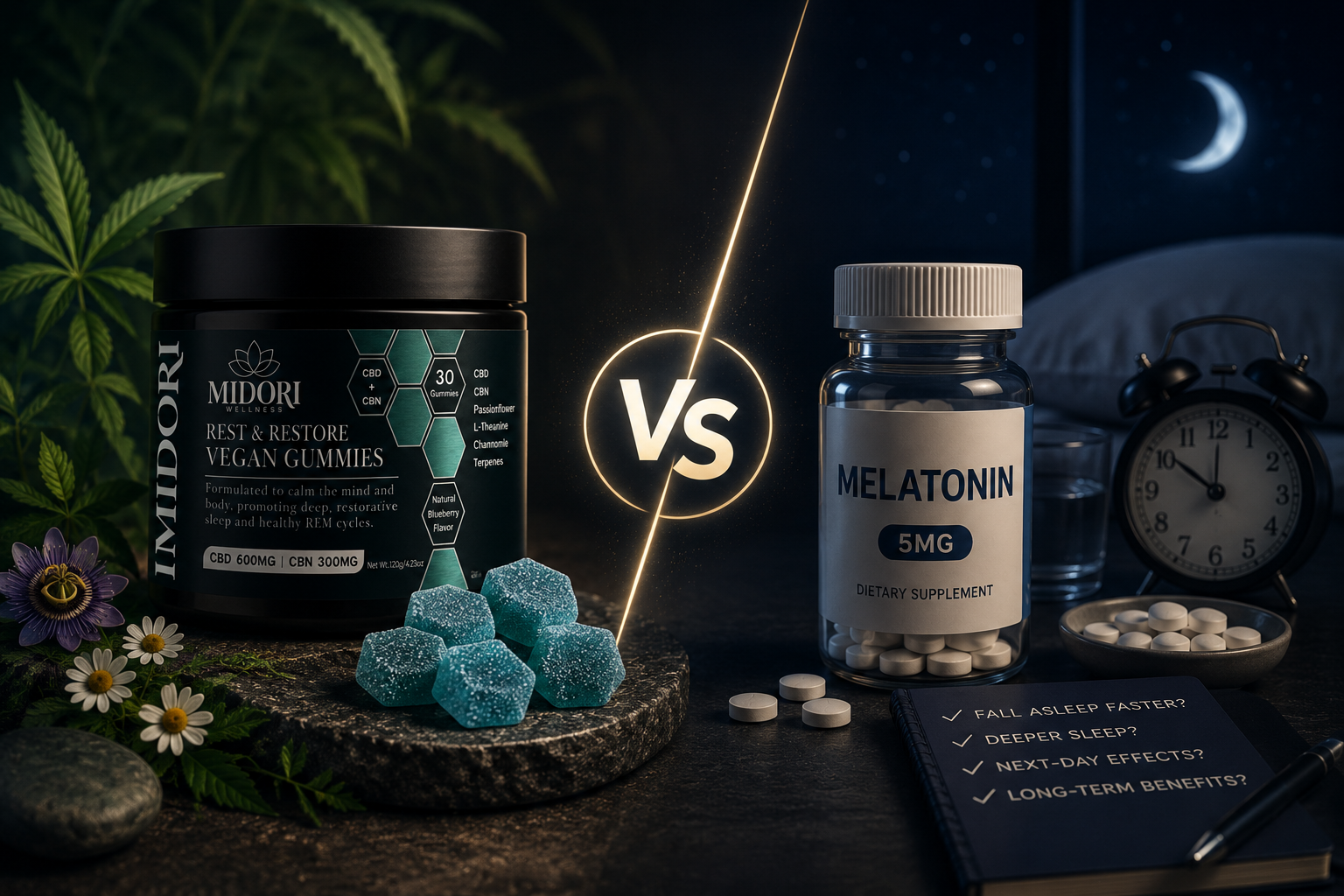
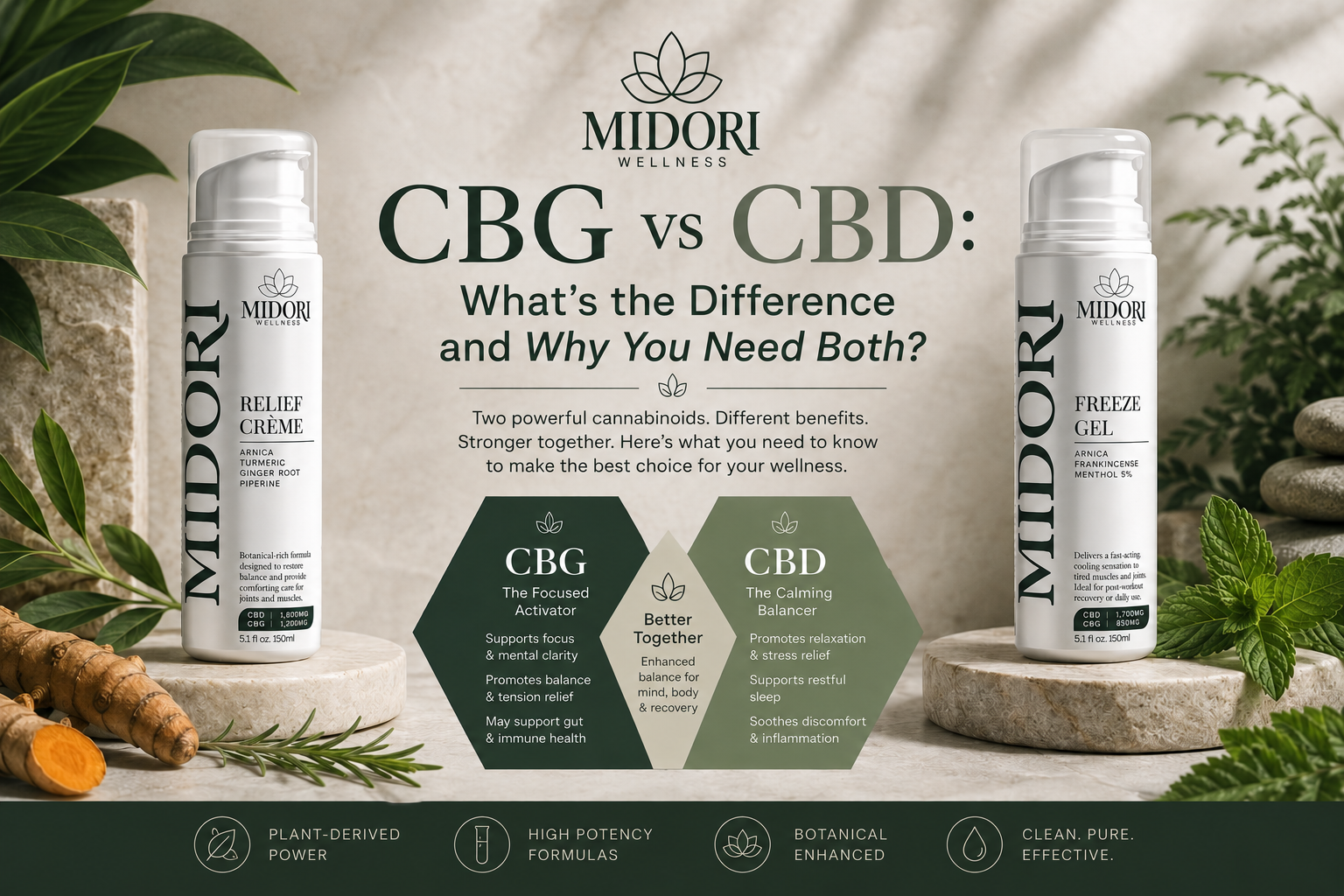
The distinction matters particularly for products like Midori Rest & Restore CBD + CBN Sleep Gummies — delivering 20mg CBD + 10mg CBN per gummy — and the Midori Relief Crème with 1,800mg CBD and 1,200mg CBG. At those cannabinoid concentrations, the THC status of the product becomes a serious consideration for anyone subject to drug testing. Broad spectrum, third-party verified, non-detectable THC is the specification that makes daily use responsible for people who can't afford a positive result.
CBN (cannabinol) is worth a specific note here: CBN remains on WADA's prohibited list for in-competition use in sport — meaning athletes subject to anti-doping rules should be aware that our Rest & Restore gummies, while free of THC, contain CBN and are not appropriate for in-competition use under WADA regulations. For more on cannabinoids and sports regulations, see our World Cup 2026 Recovery blog.
Practical Guidance: Reducing Your Risk
If you use CBD and face drug testing, here's what the evidence supports:
1. Choose broad spectrum or isolate over full spectrum
Full spectrum products carry measurable THC. Broad spectrum and isolate do not — when properly produced and verified.
2. Demand a current, batch-specific COA
Any reputable brand will make their lab results accessible. If you can't find a COA with a matching batch number, don't use the product before a test.
3. Be aware of dose and frequency
Higher doses and daily use increase cumulative THC exposure from any product that contains even trace levels. Broad spectrum eliminates this risk when properly tested; full spectrum does not.
4. Allow clearance time if switching products
If you've been using a full spectrum product and have an upcoming test, THC can remain detectable in urine for 3–30 days depending on frequency of use and individual metabolism. GoodRx's clinical overview notes that occasional users typically clear THC within 3 days while daily heavy users may need 30 days or more.
5. Know your specific test type
Urine tests are the most common and test for THC-COOH. Blood tests detect active THC and have a shorter detection window (hours to days). Hair follicle tests have the longest window — up to 90 days — and are used in high-stakes employment settings. Saliva tests detect recent use only (24–48 hours). Understanding which test you face helps calibrate how cautious to be.
The Bottom Line
CBD will not cause you to fail a drug test. THC will — and the risk of encountering unexpected THC in a CBD product is significant if you're buying from brands that don't invest in rigorous third-party testing.
The solution isn't to avoid CBD. It's to be deliberate about which CBD products you choose. Broad spectrum, non-detectable THC, batch-specific COA — these three criteria together represent the responsible standard for anyone who uses CBD and faces drug testing as part of their professional, athletic, or legal life.
For a deeper look at how CBD interacts with the body's endocannabinoid system and what the cannabinoid profile in Midori products actually does, read our post: Cannabinoids in Skincare: What CBD, CBG, CBN & CBDA Actually Do.
And for the sleep science behind our best-selling Rest & Restore gummies — including why CBD + CBN outperforms melatonin for sleep quality — read: CBD for Sleep vs. Melatonin: What's the Difference?
These statements have not been evaluated by the Food and Drug Administration. This product is not intended to diagnose, treat, cure, or prevent any disease.
Explore Midori's Third-Party Tested CBD Range →
Sources
-
Study Shows Widespread Mislabeling of CBD Content — Johns Hopkins Medicine
-
What is a Certificate of Analysis (COA) for CBD? — Healthline
-
Full Spectrum vs. Broad Spectrum vs. CBD Isolate — Medical News Today
-
WADA 2026 Prohibited List: CBD Exemption and THC Threshold — CannabisForAthletes.org
-
With Little Regulation, Many CBD Products Are Mislabeled — Pain News Network
-
CBD Oil and Drug Tests: What Athletes Need to Know — U.S. Anti-Doping Agency
-
Urine Drug Testing: What You Need to Know — Mayo Clinic Proceedings
Want to learn more? Take a look at our other blog posts.
The Science Behind Midori Repair Balm: Why Your Skin Deserves Better Than Basic Moisture.
Cannabinoids in Skincare : What CBD, CBG, CBN & CBDA Actually Do
Why the Best Sleep of Your Life Starts With What Happens After You Fall Asleep
The Gold Standard of Skincare Ingredients: Why Manuka Honey UMF 16+ Changes Everything
Japanese Skincare Ingredients: The Ancient Botanicals Behind Midori's Body Oil Ritual.
On The Green CBD Is Now Midori Wellness — and the Formulas Have Never Been Better
World Cup 2026 CBD Soccer Recovery
Does CBD Show Up In A Drug Test
CBG vs CBD: What's the Difference and Why You Need Both?
The Botanical Science Behind Targeted Comfort: Why Midori Wellness Relief Crème Is Built Different