
7 Non-Habit-Forming Sleep Aids Compared
Quick Summary
Non-habit forming sleep aids are products not expected to cause compulsive, repeated use, but that label does not mean they stay effective or free of side effects. Some lose their sedative effect within days, and older adults face higher risks such as confusion and falls. Read the label and plan how long you will use it.
- Non-habit-forming means no compulsive use, while tolerance-forming means the effect fades with repeated use.
- Diphenhydramine may cause tolerance within about three days, per a secondary source, despite its non-habit-forming label.
- Melatonin usually takes effect in 30 to 60 minutes and is best suited to circadian-timing problems like jet lag.
- Older adults face higher risks of confusion, falls and next-day impairment from antihistamine sleep aids.
- Cognitive behavioral therapy for insomnia is recommended as first-line treatment for chronic insomnia, including in older adults.
Table of Contents
- What Non-Habit-Forming Actually Means for Sleep Aids
- How We Compared These Sleep Aid Options
- Over-the-Counter Sleep Aids: The Strongest Options and Their Trade-Offs
- Best Over-the-Counter Sleep Aid Without Side Effects: What to Expect Realistically
- Prescription Options and the Best Prescription Non-Habit-Forming Sleep Aid
- Safe Sleeping Pills for Elderly Adults: Risks and Precautions
- Choosing Your Next Step for Better Sleep
- Frequently Asked Questions
What Non-Habit-Forming Actually Means for Sleep Aids
Last Updated: November 21, 2026
Many adults who struggle to sleep reach for one of the non-habit forming sleep aids on the shelf, assuming it is safe to use every night. Learn how the body's own endocannabinoid system regulates calm and balance. That label describes one specific risk, but it says little about tolerance, side effects or how well a product works over time.
The CDC reports that 12.9% of U.S. adults used sleep aids in 2024 (CDC report on sleep aid use among adults age 18 and older). The category is large, and the labels on the packaging do not always tell the full story.
Non-habit-forming versus non-addictive versus tolerance-forming
These three terms are often used as if they mean the same thing. They do not.
Non-habit-forming means a product is not expected to produce compulsive, repeated use driven by psychological dependence. Non-addictive is a stronger claim about the absence of addiction potential. Tolerance-forming describes a product whose effect fades with repeated use, so a larger dose or longer use may be needed.
A product can be non-habit-forming and still lose its effect within days. Secondary-source reporting on diphenhydramine, the antihistamine in ZzzQuil, notes that tolerance to its sedative effect can develop in about three days, despite the product being labeled non-habit-forming. That claim comes from a secondary source, so treat it as a caution rather than a universal rule.
Our advice is simple: when choosing non-habit forming sleep aids, read the label for what it actually promises, then ask how long you plan to use it.
How We Compared These Sleep Aid Options
We compared options across the categories readers ask about most: active ingredient type, whether it is sold over the counter or by prescription, the labeled use, and the main precautions. Pricing reflects the list prices published on our product pages.
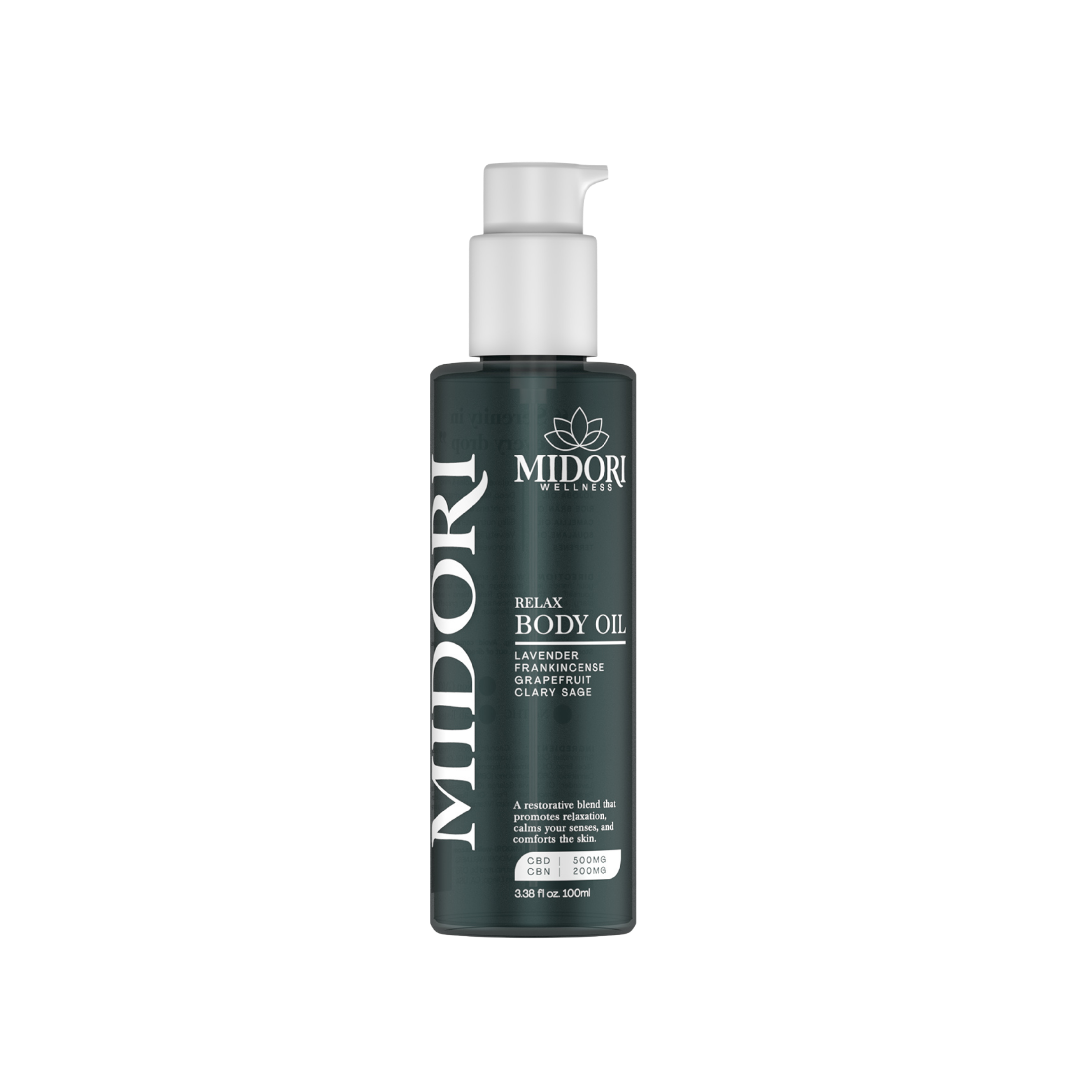
Our catalog covers three CBD and CBN formats: a nighttime gummy, a body oil and a larger body oil size. Where a product's listing did not state an ingredient, benefit or use, we left it out rather than guess.
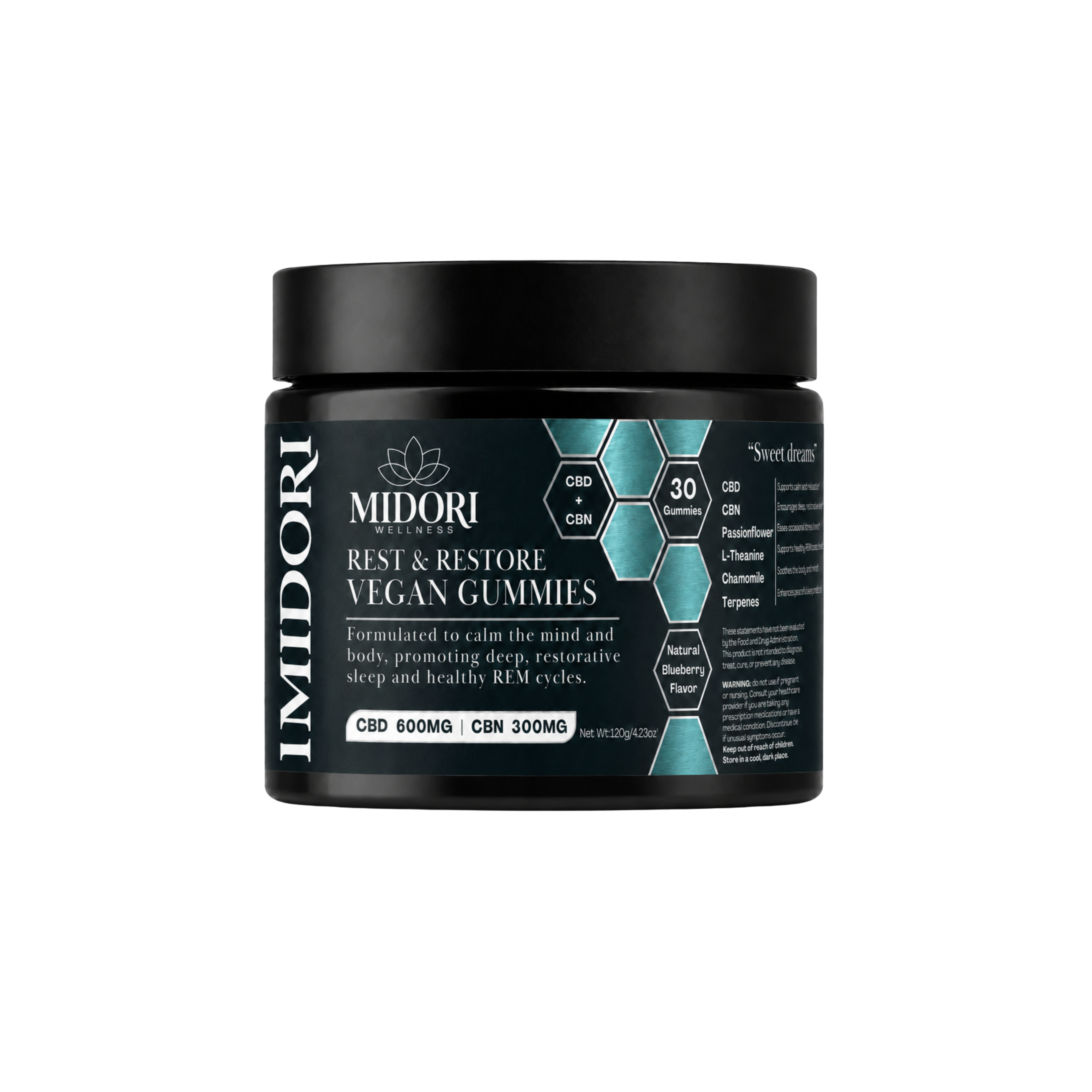
| Option | Type | Price (USD) | Best For |
|---|---|---|---|
| MIDORI Rest + Restore Gummies (30 pack) | CBD + CBN edible | $55.00 | Taking a calming ritual into the evening |
| MIDORI Relax Body Oil (100 mL) | CBD + CBN topical | $55.00 | Massage and bedtime skin rituals |
| MIDORI Relax Body Oil (32 oz) | CBD + CBN topical | $175.00 | Professional and back-bar use |
Price (USD)
Over-the-Counter Sleep Aids: The Strongest Options and Their Trade-Offs
Over-the-counter sleep aids are not one category. They fall into a few distinct groups, each with a different mechanism, a different onset, and a different set of trade-offs.
Antihistamines (diphenhydramine and doxylamine). These are the most common active ingredients in OTC sleep products. Diphenhydramine is the ingredient in products such as ZzzQuil and the original formulation of Tylenol PM; doxylamine is the ingredient in Unisom SleepTabs. Both work by blocking histamine, a neurotransmitter that promotes wakefulness, which is why they cause drowsiness. They typically take effect within 30 to 60 minutes.
Melatonin. Melatonin is a hormone the body produces to signal darkness, not a sedative. Sold as a dietary supplement in the U.S., it is not FDA-approved as a drug and doses vary widely between products. Typical labels range from 1 mg to 10 mg. It is most useful for circadian-timing problems, jet lag, shift work, and delayed sleep phase, and less reliable for middle-of-the-night waking. Onset is roughly 30 to 60 minutes.
Doxylamine combination products. Some OTC products combine doxylamine with a pain reliever for nighttime use. The sedative effect is similar to doxylamine alone, but the added analgesic matters if you are also taking other pain medication.
Botanical and amino-acid blends. Products containing L-theanine, chamomile, passionflower, valerian root, or glycine are widely sold but have thinner clinical evidence than antihistamines or melatonin. They are generally positioned as part of a wind-down routine rather than as treatments for insomnia.
Cannabinoid products (CBD and CBN). Read how CBD, CBG, CBN and CBDA differ from one another before comparing them with antihistamines. Our Rest + Restore gummy pairs 20 mg of CBD with 10 mg of CBN per gummy, alongside L-theanine, chamomile, and passionflower; its listing states that these are supported as part of a nightly wind-down routine and that the product has not been evaluated by the FDA.
Mayo Clinic advises readers to review the facts about common over-the-counter sleep aids before using them (Mayo Clinic guide to sleep aids sold without a prescription).
Watch out: combining an antihistamine sleep aid with alcohol, opioid pain medication, or another sedating product can compound drowsiness and impair driving the next morning, check every label for duplicate ingredients before stacking products.
!A woman in her 50s reads the label on a nighttime supplement bottle at a bathroom vanity before bed, soft evening light

If you want to see how topical and ingestible formats differ, read Topicals vs. Ingestible's, Two Formats, Two Different Experiences.
Best Over-the-Counter Sleep Aid Without Side Effects: What to Expect Realistically
No sleep aid is free of side effects for every person. Realistic expectations matter more than marketing claims. The label is the best place to start, and a conversation with a clinician is the best next step if sleep problems continue.
If you want a gummy-based option for a nightly routine, the MIDORI Rest + Restore Vegan Gummies, 30 Pack is listed at $55.00. The label says to take one gummy 30 to 60 minutes before bed, with or without food.
For the broader category of calming products, you can browse the Relax/Sleep range to see the topical options.
Prescription Options and the Best Prescription Non-Habit-Forming Sleep Aid
Prescription sleep medications are a separate category, and this article does not recommend a specific prescription drug. A 2023 review notes that FDA approval for pharmacological sleep aids for insomnia is limited to treatment indications (2023 review of pharmacological sleep aids for insomnia(https://pmc.ncbi.nlm.nih.gov/articles/PMC11834742/)).
Talk with your prescriber about which options fit your sleep pattern, medical history and other medications. Prescription choices should never be made from a comparison article alone.
Safe Sleeping Pills for Elderly Adults: Risks and Precautions
Older adults are the group most likely to use sleep aids regularly and the group most likely to be harmed by them. Age-related changes in liver metabolism, kidney clearance, body composition, and brain sensitivity mean the same dose that helps a 35-year-old can leave a 75-year-old confused or unsteady the next morning.
Antihistamines are the biggest concern. Diphenhydramine and doxylamine are strongly anticholinergic, and older adults are more sensitive to that effect. The American Geriatrics Society's Beers Criteria, a widely used list of medications to avoid in adults 65 and older, flags first-generation antihistamines such as diphenhydramine as potentially inappropriate because of risks including confusion, dry mouth, constipation, urinary retention, and falls. The risk grows when these products are used nightly rather than occasionally.
Falls and next-day impairment. Drowsiness that persists into the morning is a fall risk, and falls are a leading cause of injury in older adults. A common pattern is a person who takes a sleep aid at 10 p.m., wakes at 6 a.m. feeling "fine," and then drives or navigates stairs while still impaired. Anyone who feels groggy on waking should not drive.
Interactions multiply with age. Older adults typically take more prescription medications, which raises the chance of interaction. Sedating antidepressants, benzodiazepines, opioids, muscle relaxants, and alcohol all compound the effects of an OTC sleep aid. Blood thinners, blood pressure medications, and drugs for urinary symptoms can also interact with common sleep-aid ingredients.
Melatonin is not automatically safer. Melatonin is generally better tolerated than antihistamines in older adults, but supplement quality varies, and high doses can cause vivid dreams, headache, or next-day grogginess. Start with the lowest labeled dose and use it for a defined period rather than indefinitely.
Prescription options carry their own risks in this group. Some prescription sleep medications are associated with complex sleep behaviors, next-day impairment, and fall risk, and the FDA has required boxed warnings on certain classes. A prescriber who knows the full medication list and kidney and liver function is the right person to weigh those trade-offs.
What to do instead of escalating. For many older adults, the first-line approach is behavioral: a consistent wake time, morning light exposure, limited naps, and cognitive behavioral therapy for insomnia (CBT-I), which is recommended as first-line treatment for chronic insomnia in adults, including older adults. A clinician can also screen for sleep apnea, restless legs, pain, and depression, all of which can masquerade as insomnia and are common in this age group.
Watch out: "non-habit-forming" on a label says nothing about fall risk, confusion, or anticholinergic burden, for an older adult, those are often the risks that matter most.
Before trying any sleep aid, review it with a doctor or pharmacist who knows your full medication list.
Choosing Your Next Step for Better Sleep
Start by naming the problem: trouble falling asleep, waking in the night, or a short-term disruption. Match the product to the problem, check the label for precautions, and track how you feel the next morning.
If your sleep does not improve, speak with a healthcare professional. Midori Wellness offers a Rest + Restore 30-count gummy pack and body oils for an evening routine. Browse the full collection to find the format that fits your ritual.
Frequently Asked Questions
What is the best sleep aid that is not habit-forming?
No single sleep aid suits everyone. Melatonin is generally considered low risk for short-term use and is not classed as addictive, though it is still a hormone supplement and should be used as directed. Antihistamines such as diphenhydramine are sold as non-habit-forming, but the tolerance they cause can develop within a few days of nightly use, so their sedating effect may fade. Midori Rest and Restore Vegan Gummies, at $55.00 for 30 gummies, use CBD and CBN with L-Theanine, chamomile and passionflower; the product page states these statements have not been evaluated by the Food and Drug Administration and that it is not intended to diagnose, treat, cure, or prevent any disease. Talk with a healthcare professional to match an option to your sleep problem.
Are over-the-counter sleep aids safe to use regularly?
Most over-the-counter sleep aids are meant for occasional use. Mayo Clinic advises readers to review side effects and precautions for common nonprescription sleep aids before use. Antihistamine-based products can cause next-day drowsiness, dry mouth and confusion, particularly in older adults. Repeated nightly use of any sleep aid should be discussed with a doctor or pharmacist, especially if you take other medications or have an ongoing sleep disorder that does not improve.
Is melatonin habit-forming?
Melatonin is not generally considered habit-forming or addictive, and it is sold as a dietary supplement in the United States. That does not make it risk-free or a substitute for treating an underlying cause of insomnia. Some research suggests melatonin may help with jet lag or reduce the time it takes to fall asleep, although the evidence for long-term nightly use is limited. Melatonin supplements are not regulated like prescription drugs, so product strength can vary, and choosing products with independent third-party testing is worth considering.
When should I talk to a healthcare professional about insomnia?
See a healthcare professional if trouble sleeping lasts several weeks, affects your daytime functioning or mood, or continues despite good sleep habits. Persistent insomnia can be linked to anxiety, pain, sleep apnea, medications or other medical conditions that need evaluation. Cognitive behavioral therapy for insomnia is a recommended first-line treatment for chronic insomnia and is often effective without medication. Bring a list of everything you take, including supplements, so a clinician can assess interactions and suitable options.