
Article: Best Natural Joint Pain Relief: 7 Remedies That Work
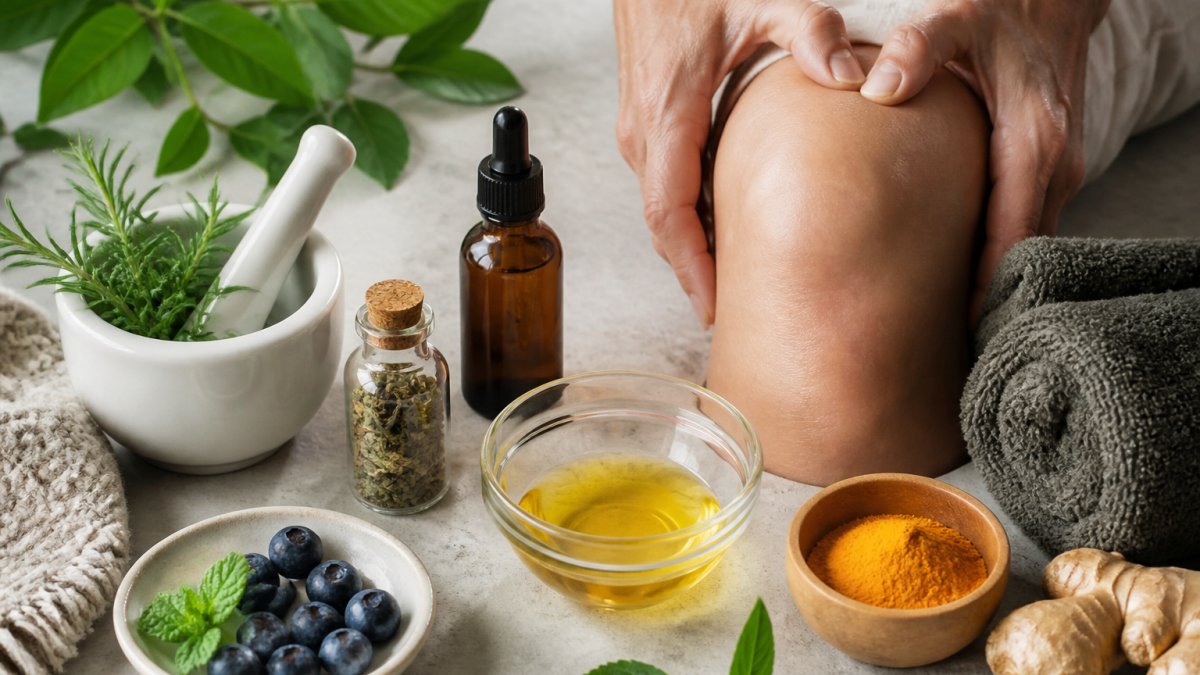
Best Natural Joint Pain Relief: 7 Remedies That Work
Table of Contents
- Why Natural Joint Pain Relief Deserves a Closer Look
- Natural Supplements for Joint Pain: What the Evidence Actually Shows
- Foods for Joint Pain and Inflammation: What to Eat and What to Skip
- Heat Therapy, Cold Therapy, and Topical Options
- Natural Knee Pain Relief: Targeted Approaches for the Most Common Joint Complaint
- Natural Remedies for Joint Pain: Exercise, Mobility, and Daily Habits
- Safety, Interactions, and When to See a Doctor
- How Long Until Natural Joint Pain Relief Works?
- Frequently Asked Questions
Last Updated: October 6, 2026
Why Natural Joint Pain Relief Deserves a Closer Look
Best natural joint pain relief works differently than a painkiller. Instead of blocking a signal for a few hours, most natural approaches reduce inflammation, support cartilage, and improve how a joint moves over weeks.
At Midori Wellness, we build botanical recovery products, so we spend a lot of time reading the same research our customers do. What we see is a category full of hype and short on honesty.
Below, we break down seven approaches that hold up, sorted by how well each one addresses the underlying problem rather than just the symptom.
Natural Supplements for Joint Pain: What the Evidence Actually Shows
Natural supplements for joint pain fall into two groups: those with real clinical backing and those carried by tradition alone. Knowing which is which saves money and disappointment.
The honest answer is that supplement evidence is mixed and often weaker than marketing suggests. The National Center for Complementary and Integrative Health notes that study results for many popular joint supplements are inconsistent, and that product quality varies widely between brands. That does not mean none of them work.
Three stand out for different reasons: turmeric, omega-3s, and the trio of glucosamine, chondroitin, and Boswellia.
Turmeric and Curcumin: The Bioavailability Problem
Curcumin is the active compound in turmeric, and it is the most studied natural anti-inflammatory available. The catch is absorption. Plain curcumin passes through the body poorly, so most of it never reaches your joints.
That is why nearly every credible curcumin product pairs it with black pepper extract.
Dosing matters too. Many studies use concentrated curcumin extracts rather than culinary turmeric, and the amounts are far higher than what you would get from cooking.
Glucosamine, Chondroitin, and Boswellia
Glucosamine and chondroitin are the classic cartilage-support pair. Results are genuinely mixed. Some people with mild knee osteoarthritis report less stiffness after 8-12 weeks; others notice nothing. The Arthritis Foundation's guidance on supplements recommends talking with your doctor before starting them and being skeptical of dramatic claims.
Boswellia, also called frankincense, works differently. Its boswellic acids appear to support joint comfort through anti-inflammatory pathways, and it has a longer history in traditional practice than glucosamine does. It is one of the more interesting options for people who want to avoid NSAIDs.
Here is how the three compare in practice:
| Supplement | What It Targets | Typical Trial Period | Watch For |
|---|---|---|---|
| Curcumin | Inflammation | 6-8 weeks | Blood thinner interactions |
| Omega-3s | Inflammation, stiffness | 8-12 weeks | Fishy aftertaste, GI upset |
| Glucosamine + chondroitin | Cartilage support | 8-12 weeks | Shellfish allergies |
| Boswellia | Joint comfort | 4-8 weeks | Mild stomach upset |
Foods for Joint Pain and Inflammation: What to Eat and What to Skip
Foods for joint pain and inflammation do more than any single supplement, because you eat them every day.
Omega-3 fatty acids are the headline act.
Antioxidants from fruits and leafy vegetables, especially berries, spinach, kale, and broccoli, help counter the oxidative stress that comes with chronic inflammation.
What to skip is just as clear. Highly processed foods, refined sugar, and excess alcohol all push inflammation in the wrong direction. You do not need to be perfect. You need a consistent baseline.
Heat Therapy, Cold Therapy, and Topical Options
Heat and cold are the fastest-acting tools you have. They will not change the underlying condition, but they can make a stiff, sore joint feel dramatically better within minutes, and that relief makes movement easier.
Heat therapy relaxes muscle tension and increases blood flow, which helps with stiffness. Cold therapy reduces swelling and numbs sharp pain after activity or an injury flare. Getting the choice right is most of the battle.
When to Use Heat vs. Cold
Use heat for chronic stiffness, morning tightness, and joints that feel better once you get moving. Warm showers, heating pads, hot compresses, and Epsom salt soaks all qualify. A paraffin wax bath is a favorite for hands and wrists.
Use cold for fresh injuries, swelling, and the hours after hard activity. Ice packs, cold compresses, and cooling gels all work. The general rule is 15-20 minutes at a time, with skin protection between the pack and your body.
| Situation | Best Choice | Why |
|---|---|---|
| Morning stiffness | Heat | Loosens tight muscles, boosts blood flow |
| Post-workout swelling | Cold | Reduces swelling, numbs pain |
| Chronic knee ache | Heat | Eases stiffness before activity |
| Acute injury (first 48 hours) | Cold | Limits swelling and inflammation |
Topical Creams and Capsaicin
Topical creams work locally, which means fewer systemic side effects than pills. Capsaicin, the compound that makes chili peppers hot, is the most studied option. It works by depleting substance P, a chemical involved in pain signaling, so the effect builds over repeated use rather than arriving instantly.
MIDORI | Relief Crème | Arnica & Turmeric | 150ml →
This is where we put our own work. Our Midori Wellness Relief Crème with arnica and turmeric pairs CBD and CBG with warming botanicals like ginger, turmeric, arnica, and black pepper. For cooling relief, the Freeze Gel uses menthol, camphor, arnica, and frankincense in a roll-on or pump format, which is easier to apply to a knee than a cream you have to rub in with your hands.


A common mistake is applying a topical once and deciding it does not work. Capsaicin and warming formulas often need several days of consistent use before the effect compounds.
Natural Knee Pain Relief: Targeted Approaches for the Most Common Joint Complaint
Natural knee pain relief starts with the same fundamentals as any other joint, but the knee carries your body weight, so load management matters more here than anywhere else.

Three things drive most knee pain: excess load, weak supporting muscles, and inflammation. The fix usually touches all three.
Weight matters too. Every pound of body weight puts several pounds of force through the knee during walking, so even modest weight loss tends to reduce knee pain noticeably.
For flare-ups, combine a topical with heat or cold and back off high-impact activity for a few days.
Natural Remedies for Joint Pain: Exercise, Mobility, and Daily Habits
Natural remedies for joint pain only work if you move. Cartilage has no blood supply of its own; it gets nutrients when the joint moves and the synovial fluid circulates.
The goal is not intensity. It is consistency. Range-of-motion work, gentle strength training, stretching, and low-impact cardio all support joint function.
Daily habits matter as much as workouts. Sleep is when your body does most of its tissue repair, and chronic poor sleep makes pain feel worse.
Stress is the underrated factor. Chronic stress keeps cortisol elevated, and elevated cortisol works against recovery.
Safety, Interactions, and When to See a Doctor
Safety is where most natural joint pain content falls short, so here is the part that matters. Natural does not mean risk-free, and several popular remedies interact with common medications.
- Turmeric and curcumin can increase bleeding risk with blood thinners and may interfere with some chemotherapy drugs.
- Omega-3 supplements in high doses can also thin the blood. Tell your surgeon if you take them before any procedure.
- Glucosamine is often made from shellfish shells. Skip it if you have a shellfish allergy.
- Capsaicin and menthol topicals can irritate sensitive skin. Test on a small area first, and never apply to broken skin or near the eyes.
- CBD and CBG topicals are generally well tolerated, but check with your doctor if you are pregnant, nursing, or on prescription medication.
See a doctor promptly if you have joint pain with redness and heat, a fever, sudden severe swelling, pain that wakes you at night, or pain that persists beyond a few weeks without improvement. Those signs point to something that needs a diagnosis, not a supplement. The CDC's guidance on arthritis and joint symptoms is a useful starting point for understanding when symptoms warrant a professional evaluation.
How Long Until Natural Joint Pain Relief Works?
Natural joint pain relief is slow by design. Topicals can feel good within minutes because of the warming or cooling sensation, but the deeper anti-inflammatory effect builds over days. Supplements typically need 6-12 weeks. Diet and exercise changes show up over 8-12 weeks.
That timeline is why tracking matters. Pick one or two remedies, note your pain level on a simple 0-10 scale each week, and give it a fair trial before adding something else.
What matters most is patience plus consistency. The people who get results are rarely doing anything exotic.
Joint pain has a way of shrinking your life, one skipped walk and one avoided staircase at a time. At Midori Wellness, we build botanical recovery products for exactly that moment: clean, vegan, third-party tested formulas with broad spectrum CBD, non-detectable THC, and purposeful ingredients like turmeric, arnica, ginger, and frankincense. Our Relief Crème and Freeze Gel are designed for targeted, everyday use, whether you are managing a chronic ache or recovering from a hard training session.
Frequently Asked Questions
How long does it take for natural joint pain remedies to work?
Timelines vary by remedy type. Topical creams and heat or cold therapy often provide relief within minutes to hours. Oral supplements like turmeric, omega-3s, and glucosamine typically take 4 to 12 weeks of consistent use before you notice meaningful changes in stiffness or discomfort. Anti-inflammatory dietary changes may show gradual improvement over 6 to 8 weeks. Track your symptoms weekly so you can tell whether a remedy is actually helping rather than guessing.
Which foods should I eat for joint pain and inflammation?
Focus on fatty fish like salmon (rich in omega-3 fatty acids), leafy vegetables, colorful fruits high in antioxidants, whole grains, and healthy fats like olive oil. Turmeric and ginger are easy to add to soups, teas, and smoothies. Reducing processed foods, refined sugar, and excess alcohol also helps because these can promote inflammation. Small, consistent dietary changes over several weeks often produce more noticeable results than a short, strict overhaul.
Can natural supplements for joint pain interact with my medications?
Yes. Turmeric, ginger, and omega-3 supplements can thin the blood, which matters if you take warfarin, aspirin, or other anticoagulants. Glucosamine may affect blood sugar in people with diabetes. Boswellia can interact with anti-inflammatory drugs. Always tell your doctor or pharmacist about every supplement you take, including doses. Bring the actual bottles to appointments so they can check for interactions with your prescriptions.
When should I see a doctor about joint pain instead of treating it at home?
See a doctor if joint pain lasts more than two weeks, keeps getting worse, or comes with swelling, redness, or warmth around the joint. Seek care quickly if you have fever, sudden severe pain, inability to bear weight, or pain that wakes you at night. These signs can point to infection, gout, or inflammatory arthritis that needs medical treatment. Natural remedies work well for mild, occasional stiffness, but they are not a substitute for diagnosis when something feels seriously wrong.
Can exercise help relieve joint pain naturally?
Yes. Low-impact exercise like walking, swimming, cycling, and gentle stretching keeps joints lubricated, strengthens the muscles that support them, and reduces stiffness. Aim for 20 to 30 minutes of movement most days, and warm up before activity. If a joint is swollen or acutely painful, rest it first and use cold therapy, then return to gentle movement as tolerated. A physical therapist can design a routine matched to your specific joint and condition.

